Find Joy in Personal Progress: Why Authentic Community Matters
- Luke Cunningham
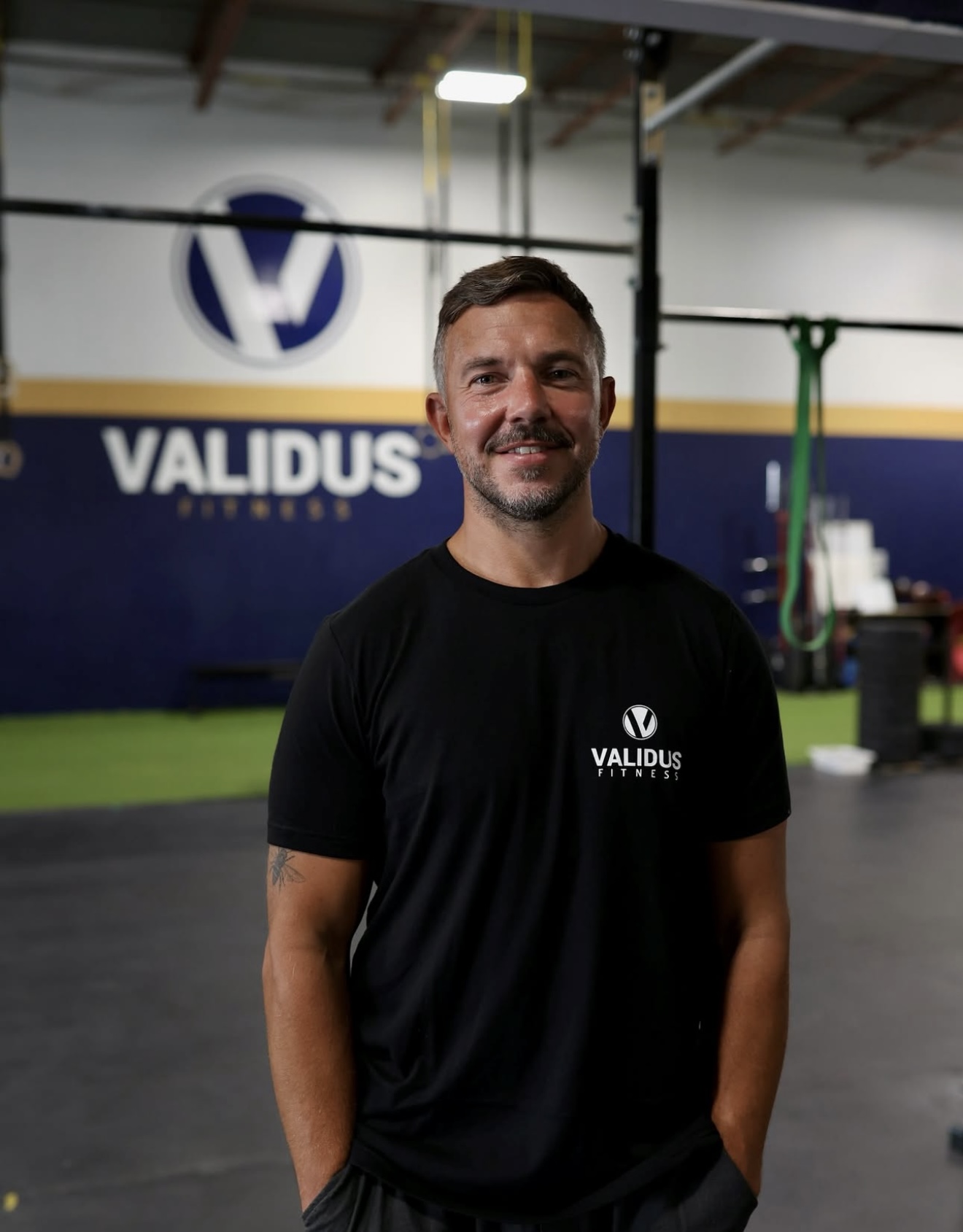
- Mar 26
- 4 min read

How Validus Fitness Creates a Space Where Everyone Wins
As a lifelong fitness enthusiast, I've always had a love for the gym and a passion for pushing my limits. Even during my rugby days, pre-season conditioning was something I genuinely looked forward to. Having started weightlifting at the age of 15, you'd think I'd be confident and content with my progress by now.
Yet, this time last year (in my pre-Validus days), I found myself caught in the comparison trap. Despite feeling exhausted and having slept poorly, I decided to push myself beyond my limits by adding more weight to my deadlift—simply to match someone else's performance in the gym. I ignored the little voice in my head advising against it and was more concerned with what this stranger thought of me than focusing on my own form and mindset.
And while I did manage to complete the lift, it came at a high cost. I injured my back, and three weeks later, the pain persists. Simple joys, like playing with my kids or even getting dressed, became challenging.
This experience is a stark reminder of the dangers of comparing ourselves to others and the impact of social media on this tendency. Much of what we see online is curated or exaggerated, showcasing those who have dedicated immense time and effort to reach extreme levels of fitness—often at the expense of other life's joys.
The Validus Difference: Community Over Competition
This incident happened at a different gym, and it made me appreciate even more what we've built at Validus Fitness. Walking into Validus feels fundamentally different because the culture isn't built on comparison—it's built on genuine support.
At Validus, everyone is working to become better versions of themselves, but crucially, without the ego that plagues so many fitness spaces. You'll find former athletes training alongside complete beginners. You'll see people celebrating a friend's first pull-up with the same enthusiasm as someone hitting a new personal record on their back squat. The member who's been training for years will just as readily offer encouragement to someone struggling through their first week as they will to their usual training partner.
This isn't accidental. It's the intentional result of fostering an environment where:
Progress is personal and celebrated at every level. Whether you're adding 5kg to your lift or simply showing up consistently for the first time in years, your wins matter equally.
Vulnerability is valued, not viewed as weakness. Members openly discuss their struggles, modifications, and setbacks without fear of judgment. This creates psychological safety that allows everyone to train intelligently rather than recklessly.
Knowledge flows freely without gatekeeping. More experienced members share tips on form, recovery, and programming—not to show off their expertise, but because they genuinely want others to succeed and avoid the mistakes they've made.
Scaling is normalized, not stigmatized. Every workout can be adapted to meet you where you are today—not where you were last week or where someone else is. Coaches actively encourage this wisdom, and members model it for each other.
Why Ego-Free Training Matters for Long-Term Success
Research consistently shows that intrinsic motivation—training for personal growth, enjoyment, and health—leads to better adherence and long-term success than extrinsic motivation driven by comparison or external validation (Teixeira et al., 2012). When you're constantly measuring yourself against others, you're more likely to:
Push beyond appropriate training thresholds, increasing injury risk
Experience burnout and decreased enjoyment
Develop unhealthy relationships with exercise and body image
Quit entirely when progress doesn't match unrealistic expectations
Conversely, a supportive community environment has been shown to improve exercise adherence, reduce anxiety around physical activity, and create sustainable behavior change (Beauchamp et al., 2018). At Validus, this isn't just theory—it's daily practice.
The Power of Training Alongside, Not Against
Just because others have chosen a particular path doesn't mean it's right for you. The essence of "do you" rings true here, and it's something you can genuinely feel at Validus. When you walk through those doors, you're not entering a space where you need to prove yourself or compete for status. You're joining a community of people at different stages of their journey, all committed to showing up and doing the work without the need to diminish others in the process.
This is what sustainable fitness looks like. Not the highlight reel on social media. Not the person who sacrifices everything else in life for their training. But real people, with jobs and families and other responsibilities, support each other in becoming healthier, stronger, and more capable versions of themselves.
Wherever you are in your health journey, focusing on your own progress can bring immense joy and fulfillment. Comparisons can diminish your achievements and even discourage you from starting at all. At Validus, you'll find a space that actively works against those destructive patterns—where the person next to you is cheering for your success as loudly as their own.
Reflect on what truly matters to you, and take steps forward based on your own goals and values. If you're looking for a gym community that will support your individual journey without ego or judgment, Validus might be exactly what you've been searching for. And if you need personalized guidance and support on your nutrition journey to complement your training, feel free to click the link below to book a consultation.
References:
Teixeira, P. J., Carraça, E. V., Markland, D., Silva, M. N., & Ryan, R. M. (2012). Exercise, physical activity, and self-determination theory: A systematic review. International Journal of Behavioral Nutrition and Physical Activity, 9(1), 78.
Beauchamp, M. R., Puterman, E., & Lubans, D. R. (2018). Physical inactivity and mental health in late adolescence. JAMA Psychiatry, 75(6), 543-544.


Comments